Structure governs product mastery.
The Foundry transforms product documentation into structured learning systems aligned to correct use, safe operation, and measurable proficiency. Documentation informs. Structure enables.
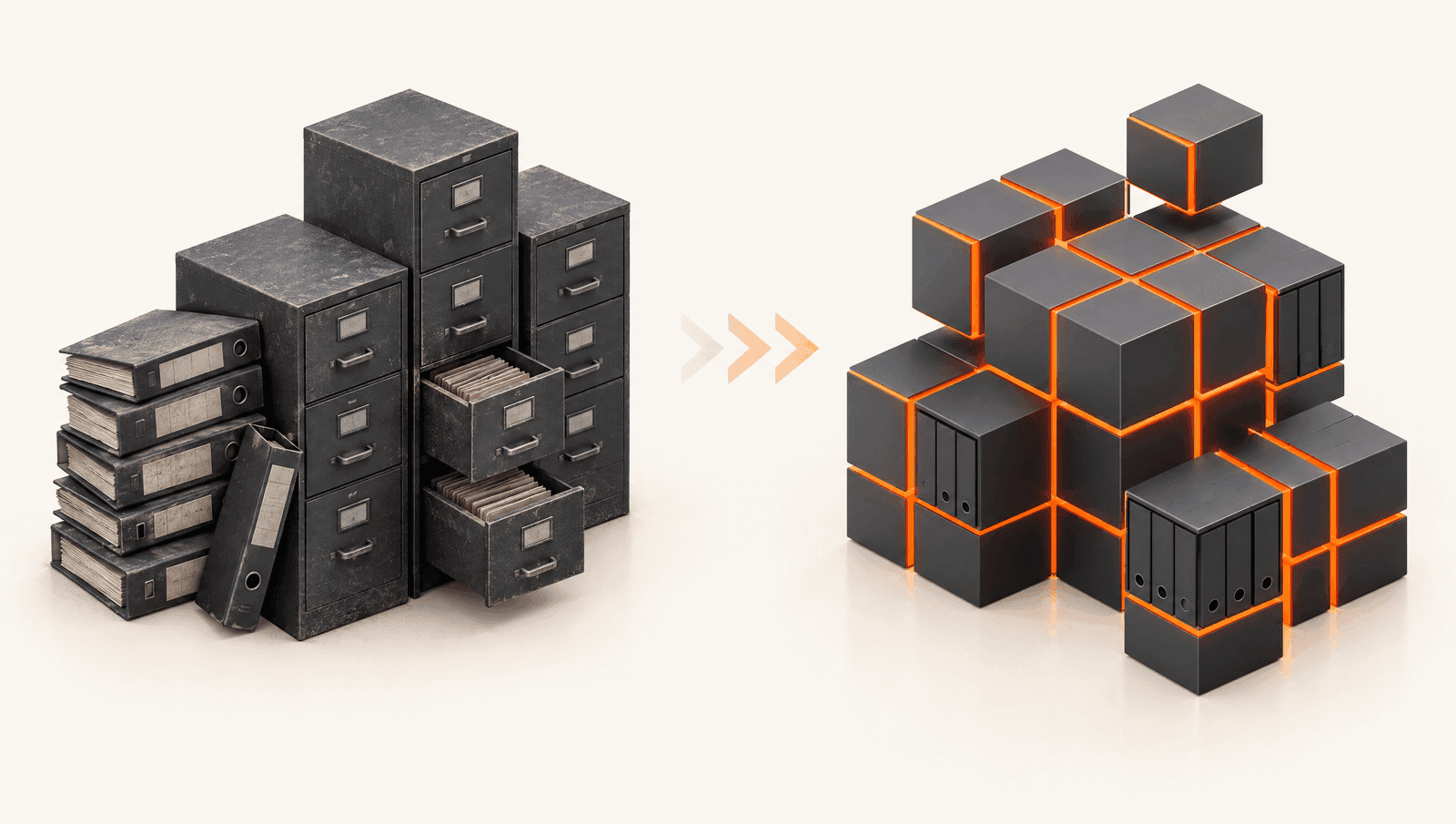
Documentation does not guarantee correct use.
Most products are supported by user manuals, release notes, and knowledge bases. Artifacts written for reference, not for progression. Enablement driven by manuals produces information overload, fragmented understanding, workflow confusion, and increased liability when misconfiguration causes harm. The failure is not documentation. The failure is the assumption that documentation, in itself, produces capability.
The Foundry treats the product as a structured object (capabilities, dependencies, failure modes) and generates instruction that builds the mental model the user needs to operate the product safely and correctly. Documentation remains the reference. Enablement becomes the path.
From documentation to structured mastery.
Capability extraction
Core product capabilities, feature dependencies, and configuration surfaces are extracted from your documentation and modeled as a structured object, rather than left implicit in a manual.
Mapping critical workflows
The sequences that matter (onboarding, configuration, integration, escalation) are identified and taught explicitly, not left to the user to reconstruct from a knowledge base.
Misuse prevention
Common failure modes, operations sensitive to risk, and pathways prone to error are surfaced during framework construction and reinforced with proportional instructional emphasis.
Variants tailored to role
One approved framework produces adapted programs for internal engineers, implementation specialists, sales engineers, customer success, and end users, without diverging from source truth.
Terminology faithful to source
Preserved terminology, imagery aware of context, and traceable lineage mean the program cannot drift from the product it teaches. When the product changes, the program knows.
Regeneration aligned to release
When a feature ships, the framework diffs against the new documentation and regenerates only the affected blocks. No full rewrites. No stale onboarding.
Interpret. Structure. Generate. Version.
Enablement is not a one time program. It is a system that stays aligned to the product as it ships. When the product changes, the enablement knows.
Interpret documentation
User manuals, release notes, technical documentation, and knowledge base articles are ingested and read for capabilities, dependencies, and failure modes.
Construct the framework
A structured enablement model is proposed: capabilities, workflows, operations sensitive to risk, role tracks, and validation checkpoints. Reviewable before generation.
Generate role tracks
Instruction is produced per audience (engineer, implementer, seller, customer, partner) from the same framework. Depth and vocabulary adapt. Source truth does not.
Version with the product
When releases ship, the system parses documentation again, diffs against the framework, and surfaces exactly which blocks need regeneration. Enablement stays current.
Faster onboarding. Fewer support tickets. Correct configuration.
Organizations gain faster onboarding, reduced configuration error, lower support burden, higher feature adoption, and a scalable enablement architecture that does not rebuild itself with each release. Users gain clear workflow understanding, structured feature progression, and confidence in configuration.
The outcome is not exposure to product features. The outcome is correct, confident product use. Measurable at the role level and evidenced against the source documentation it derives from.
How product enablement programs work, in detail.
Where this fits in the system.
See your documentation become a program.
Send us your product documentation, a manual, or a release brief. In 45 minutes with the Foundry on your material, you leave with the enablement framework it produces.
We reply within one business day.