Assurance and release
Humans still decide what goes live.
Explains how Knowledge Foundry keeps humans in control of release while AI speeds up drafting. Covers the assurance queue and its statuses, why fast and guided programs face the same review, why nothing auto-publishes, how targeted edits loop back into review, and a sample path from draft to executive sign-off to catalog.
Next: Audit evidence packTranscript
Generated from the video's narration and lightly edited for readability.
0:00Welcome to this explainer. Okay, today we are tackling what is honestly the ultimate tightrope walk in modern learning and development. I mean, assisted production gives us this incredible, unprecedented speed, right? But, and this is a big but, that speed is absolutely useless if our leaders don't actually trust what hits the screen. So today we're going to unpack exactly how Knowledge Foundry's Production Console guarantees that human beings hold the keys to the final release, no matter how fast the AI is building.
0:28Let's just dive straight into it. This is probably the most valid objection you're gonna hear in any enterprise environment. If AI helps build the course, do we lose control? Look, it's a completely natural fear. Risk-aware leaders and compliance teams, they all want that AI velocity for sure. But they are terrified, literally terrified, of a half-baked training program just quietly going live while no one is looking. To solve this, we kind of have to reframe the problem.
0:53You see, we often conflate two very different things here. The perceived risk, the thing keeping everybody up at night, is just the idea of AI drafting the content. But the actual business risk, the thing that could trigger a massive compliance nightmare? That's automated deployment without a deliberate human decision. And Knowledge Foundry is built from the ground up to completely eliminate that deployment risk. And that brings us to the assurance queue. Now don't think of this as just some basic checklist or a clunky dry review tool. Think of it as your organization's absolute decision surface.
1:26This is the designated arena where a real human being actually looks at the material and makes a definitive choice. You can approve it, you can send it back for specific revisions, or you can just flat out reject it. The AI builds, sure, but the humans always govern. Because when you're managing a massive learning library, visibility is everything. We're looking at queue statuses like pending, needs revision, approved, lessons approved, published to site catalog, and rejected.
1:52Instead of guessing, your entire portfolio's health is clearly mapped out right here. At a quick glance, leaders know exactly what's pending review, what needs revision, and what is truly ready for learners. There's zero ambiguity about a piece of content state. And this brilliantly illustrates the shift we're making. We've all lived the old way, right? A critical compliance module gets quote-unquote approved via a thumbs-up emoji buried deep in some random Slack channel. Or maybe it gets lost in a 40-deep email thread. It's an auditor's worst nightmare, and quite frankly, a disaster waiting to happen. Knowledge Foundry completely replaces that scattered chaos. By using a highly visible, structured queue, those informal approvals are just dead. Every single decision is intentional, it's centralized, and it's tracked.
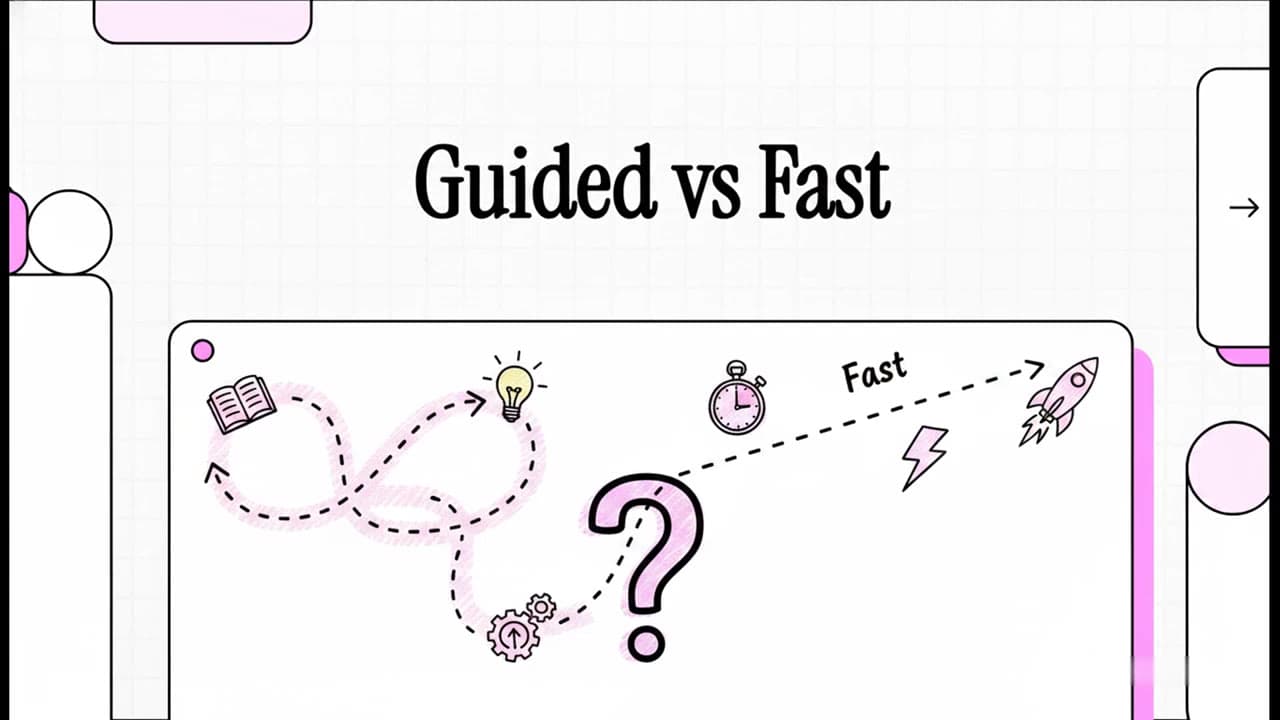
2:35Now, you might assume that only our heavily staged, guided production path is safe, and that giving AI autonomy via fast production is super risky. Actually, scratch that. It's a total myth. Regardless of how rapidly a program was drafted, both of these paths hit a brick wall at the human assurance gate. They both undergo the exact same rigorous review before they can ever, ever be treated as live content.
2:58Let's make one non-negotiable architectural constraint crystal clear right now. Fast does not mean auto-publish. The system simply does not auto-publish, period. Fast just means you're saving your team weeks of manual drafting effort. But at the end of that sprint, the system stops, and it waits for your signature. Speed and control are perfectly paired. But you know, what if you were reviewing a draft and you just spotted a typo?
3:26Or maybe a single policy detail needs a tiny tweak? You definitely don't want to reject the whole shebang just for that. So a human steps in, makes a surgical edit using the creator tool, and then, and this is absolutely crucial, they don't just hit publish. They submit it back for review, dropping that edit right back into the shared assurance queue. It's a refinement instrument. It is never a bypass around your release gates.
3:48Because every single edit loops back, governance stays perfectly intact. In a lot of legacy systems, a rogue admin can just go in, change a paragraph on a live course, and alter your catalog silently without any paper trail. Knowledge Foundry makes silent rewrites fundamentally impossible. Every targeted edit is documented and routed through the exact same assurance gates we've been talking about. To put that into perspective, let's trace the final path to release.
4:12Say it's day one, your rapidly generated draft lands in the assurance queue. Day two, reviewers make their surgical edits and finalize the content. Day three, a required executive sign-off kicks in for high-stakes material. And only then, on day four, does it actually hit the catalog. The content goes live strictly after the humans say so. So can we move faster without giving up the release decision? The entire architecture of Knowledge Foundry proves that yes, faster drafting and deliberate release are not enemies.
4:42You get the unbelievable advantage of AI speed, giving your experts a massive head start, but you never surrender the final call. So I'll leave you with this. If your team no longer has to spend weeks manually drafting content, what bigger strategic problems could your human experts be solving with all that reclaimed time? Thanks for joining me on this explainer, and stay in control.
More explainers
Start here
See it work
Trust and control
Prove value
Go deeper
Bring a subject. Leave with a framework.
A 45-minute working session with our team on a real subject or program you own. You see the system operate on your material, and you keep the framework it produces.
We reply within one business day.